




Building Leadership Capacity in the Time You Already Have
Every Conversation Counts
School leaders are always balancing competing priorities. Between instructional leadership, problem-solving, and the countless demands of a school day, finding time for intentional leadership development can feel like one more thing on an already-full plate.
But what if building the capacity of your team didn't require adding something new to your schedule?
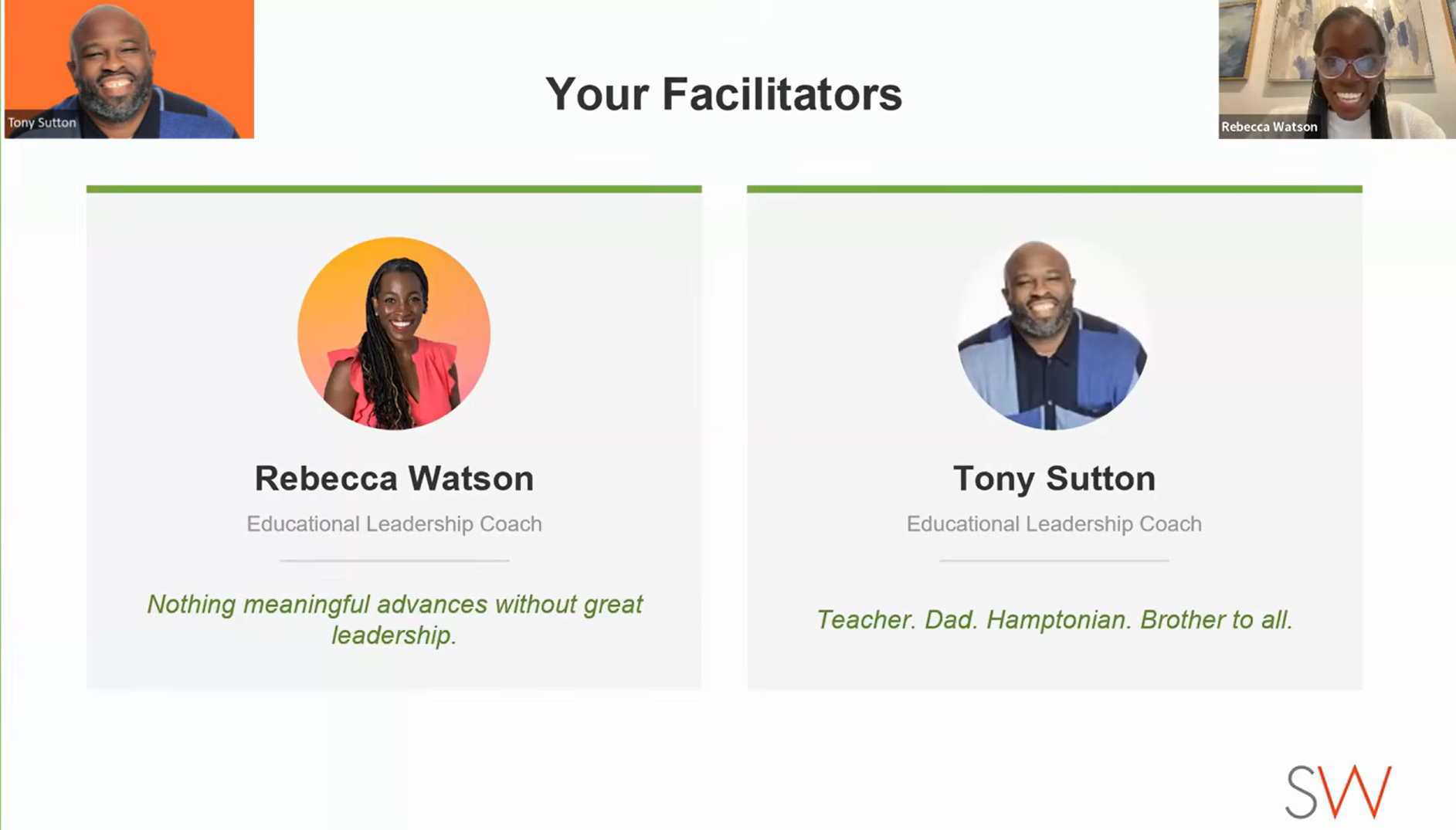
In a recent SchoolWorks webinar, Every Conversation Counts: Building Educational Leadership Capacity in the Time You Already Have, Leadership Coaches Rebecca Watson and Tony Sutton introduced a framework that challenges leaders to think differently about the everyday interactions they already have.
Their central idea? The unit of change in capacity building is conversation.
Every one-on-one meeting, classroom observation debrief, data discussion, or even quick hallway exchange can become an opportunity to strengthen the skills and confidence of the people around you. The key is approaching those conversations with intention.
Consider the QTW Framework.
Drawing on their experiences supporting school leaders and teams, Rebecca and Tony shared a practical framework called Questioning, Teaching, and Wondering (QTW). Its three components offer a flexible structure for turning everyday interactions into opportunities for professional growth.
Question: Get to the heart of the matter.
Leaders ask questions all the time. But not every question creates an opportunity for meaningful growth. There is a difference between asking a question that is at the root of the thing, and asking around it. People are often waiting for the root question. It frequently does not get asked.
Consider a few examples of how root-level questioning can change the way your team participates in problem-solving:
Instead of asking... | Try asking... |
How can we improve student achievement? | What are students consistently struggling to learn, and what does that tell us about our instruction? |
How can we get teachers to buy into this initiative? | What concerns might teachers have that we haven't genuinely listened to or addressed? |
Why aren't our coaching cycles working? | What evidence do we have that our coaching is changing teacher practice? |
Effective questioning goes beyond surface-level conversation to encourage deeper thinking and help team members reflect on their own practice.
Teach: Make your thinking visible.
Leaders bring a wealth of experience, expertise, and institutional knowledge to their roles. But how often do they make that expertise accessible to others?
Rebecca shared an example of a principal who wanted her teacher leaders to strengthen their instructional feedback. Rather than simply telling them what to look for during classroom observations, the principal walked them through her own process: how she organized her notes, what she paid attention to first, and how she thought through what she was seeing.
It took just five minutes for the principal to explain her process, but the impact was lasting. Months later, teacher leaders identified that very interaction as one of the most meaningful experiences in building their leadership capacity.
Wonder: Think alongside your team.
Leadership doesn't mean having all the answers. In fact, some of the most meaningful opportunities for improvement emerge when leaders invite others into the problem-solving process.
Tony shared an example of a principal who involved her entire school team in reviewing findings from a schoolwide assessment. Together, they identified opportunities to maximize instructional time. Teachers surfaced challenges that school leadership hadn't initially recognized, including inefficient snack schedules and classroom transitions.
By working together, the school adjusted its routines and reclaimed 17 minutes of instructional time each day.
The takeaway? When leaders create space for others to think, contribute, and problem-solve, they often uncover solutions that wouldn't have emerged otherwise.
What Are The Ingredients That Make It Work?
The Questioning, Teaching, and Wondering Framework provides the structure, but Rebecca and Tony emphasized that five less-visible ingredients are equally important to making the framework effective:
- Humility: Approach conversations with a learning orientation, recognizing that everyone has something to offer and something to learn.
- Vulnerability: Make your thinking, reasoning, concerns, and decision-making processes visible to others.
- Transparency: Share what you know, acknowledge what you don't know, and communicate openly about what affects your team.
- Confidence: Trust your experience and expertise while making room for others to contribute their own ideas and perspectives.
- Collaboration: Recognize that capacity building is shared work. Leaders are members of their teams, too, and meaningful growth requires everyone to participate.
One practical way to bring these ingredients into everyday interactions is to take responsibility.
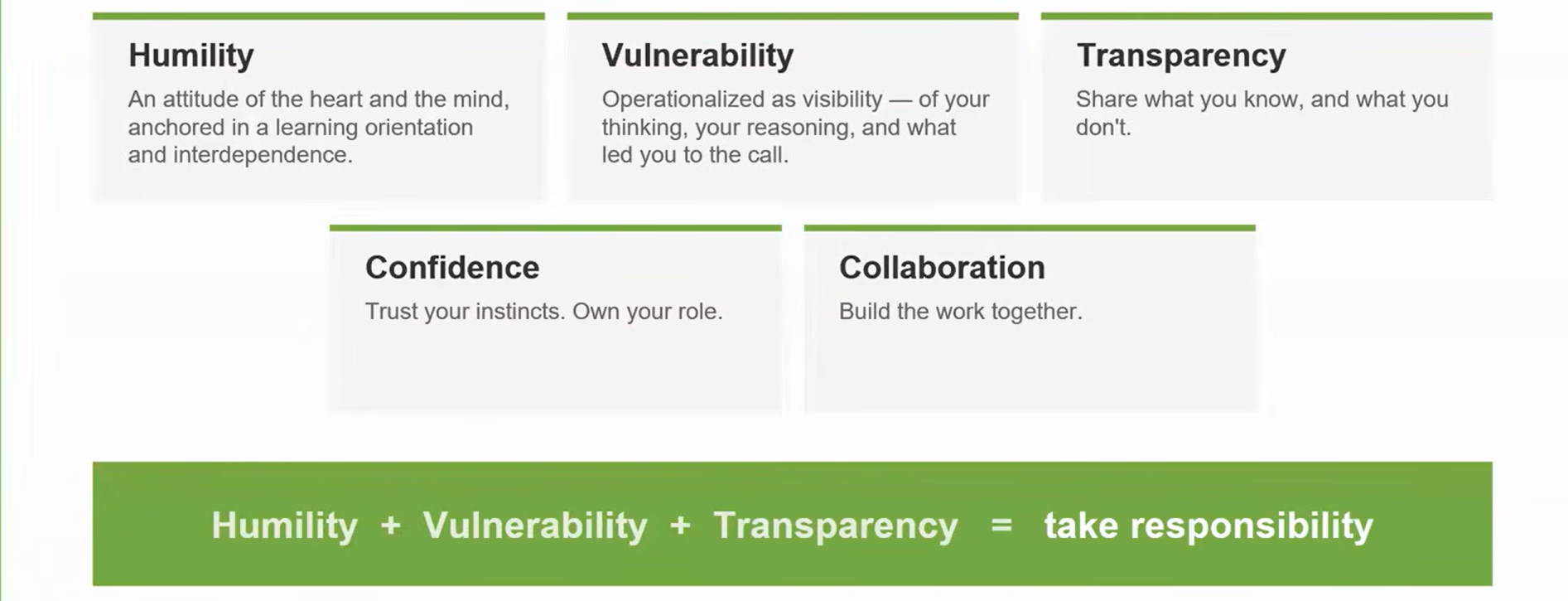
As Tony explained, naming what you're responsible for, including where you need to learn, communicate more openly, or engage differently, helps create an environment where others feel more comfortable doing the same.
Start With The Conversations You're Already Having.
Building leadership capacity does not have to mean adding another initiative or finding more hours in the day. It can begin with a shift in how you approach the conversations already happening throughout your school or district.
Consider your next team meeting, coaching conversation, or classroom observation debrief:
- What question could help uncover the heart of the issue?
- What knowledge or experience could you make visible?
- Where could you invite others to wonder and problem-solve alongside you?
Small shifts in everyday interactions can create meaningful opportunities for individual and collective growth.
Every conversation counts. The opportunity is to make each one count a little more.
Let's Continue The Conversation.
To explore the framework further, watch the full webinar recording featuring Rebecca Watson and Tony Sutton.
Watch the Webinar: Every Conversation Counts
We welcome you to also download the Questioning, Teaching, and Wondering (QTW) Reference Guide to help you bring the framework into your own leadership conversations.
If your school or district is looking for additional supports developing capacity for School Leaders, please feel free to reach out to us anytime at hello@schoolworks.org.
Let’s grow together!
